1940's - 1960's
Rock is thought to have originated from the late 1940's, where a popular music style of the time (blues and country) were combined with a steady drum beat and an electric guitar. In the 1950's, artists such as Chuck Berry used the blues structure but displayed his own style as a performer. As this was a conservative time, the aggressive nature of rock (often suggesting sexual freedom) was found shocking by many.The Rolling Stones, inspired by Berry, tackled controversy (caused by them showing sex and youth rebellion) and took rock to a new level.
1970's
This was the time where rock became more popular as a genre. Led Zeppelin in this decade gave rock a darker, heavier tone, inventing the sub-genre hard rock or heavy metal. Around the same time, Pink Floyd created progressive rock, by combining complex arrangements and a theme maintained across albums. In response to this, in the late 70's, bands such as The Clash and The Sex Pistols shunned the "hippie" bands like Pink Floyd and stripped rock down to it's basic essence: loud guitars, attitude and enraged singing, which led to the creation of the punk sub-genre.
1980's
At this time, the sub-genres of rock began to assert their dominance and place in the music industry. English bands such as Depeche Mode were more keyboard-orientated and showed a introvereted songwriting style, leading to postpunk, whereas American groups such as REM created college rock (later known as alternative or indie, as some artists/bands were signed to small labels), named because it was popular on college radio stations. In 1988 the music magazine known as Billboard gave alternative rock music its own chart (calling it modern rock).
1990's - Present
Nirvana's 1991 album "Nevermind" made alternative rock a more dominant sub-genre, and the age of grunge (a mix between hard rock and punk) was born. By the middle of the decade after Niravana frontman Kurt Cobain's suicide, mainstream rock made a comeback after the popularity of alternative rock faded. Limp Bizkit was one of the first bands to embrace this, creating the new hybrid sub-genre of rap-rock. Bands such as Staind and Puddle of Mudd followed, but focused more on melodic hard rock than the rapping element. Red Hot Chili Peppers, who did not quite fit in with the grunge genre, continued to find new audiences throughout the 90's. Bands such as Foo Fighters re-energised mainstream rock with the influence of the alternative sub-genre. Today there are various bands from different sub-genres. Linkin Park for example combines hip-hop and metal, whereas 3 Doors Down creates a contemporary version of hard-rock traditions.
Monday, 19 September 2011


Sunday, 18 September 2011
Digipak Research Findings: Lostprophets & Good Charlotte
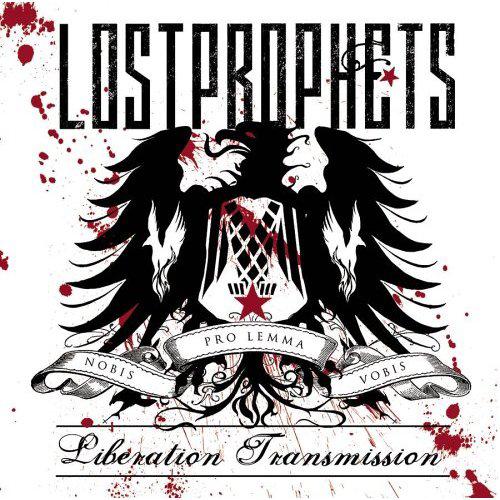
For my research on these two bands, I have decided to analyse the style of two of their album covers (front and back) and to then draw conclusions as to the general conventions for the rock genre. The two Good Charlotte albums I will be analysing are "The Young And The Hopeless" (2002) and "Good Morning Revival" (2007). The two Lostprophets albums I will be analysing are "Start Something" (2004) and "Liberation Transmission" (2006).


 Similarities and certainly conventions are clearly shown on the album covers I have chosen. All album covers except "Good Morning Revival" have the name of the band in that band's particular font, making it instantly recognisable and iconic. Another similarity is the title of the album, as for three of the four album covers (all except "Good Morning Revival"), are all in the same script-like font, differing from the way in which the band name is portrayed. "Good Morning Revival" however is in the same font as Good Charlotte, and evidently goes against the conventions that are beginning to show. Being a later album for the band, perhaps this has been stylistically done to show a different side to them, in order to appeal to other audiences. For the album cover I will create for my music video, I believe I will follow the conventions shown in the majority of these album covers.
The Young And The Hopeless & Good Morning Revival
"The Young And The Hopeless" album cover generally has a dark colour scheme, with the band title and album name in a dark shade of green. In-keeping with conventions of album covers for the rock genre, this album has artwork on the front cover, relating to the theme of the songs on the CD. The font in which "Good Charlotte" is written has connotations of rebellion and conveys the band's image and attitude that is often shown in their songs and music videos. This is also shown on the back of the album, through the clothes the band are wearing, which are dark and conventional of the rock genre, along with a couple of band members' hairstyles (iconography). The song listed are at the bottom of the cover, as more attention is drawn to the band instead.
Conversely, the "Good Morning Revival" album cover completely contrasts to the other album cover by this band. The colour scheme is a simplistic and bright white and orange. The front is of minimalistic styling, and shows a long shot of the band with all their music equipment. A basic font and plain background ensures the main focus of attention is drawn to the band, but the orange makes the album eye-catching. The band's iconic "GC" logo is still present on the cover, in the form of a shadow. The back of the cover takes a more artistic approach, with an assortment of polaroid pictures of the band and a reverse in the colour scheme; from white to black. Similar to the other album cover, the songs are listed at the bottom.
Start Something & Liberation Transmission
The "Start Something" album has the image of an empty motorway (or highway), and the same image is maintained onto the back. The album uses artwork, typical of this rock genre, and makes use of the colour red throughout. The image of one person on the motorway with the city behind him could symbolise his significance compared to his surroundings, and the pose which he is in suggests emotion. Again, dark colours are used overall, but the red draws attention to the band name. One the back, the red artwork dominates the cover and similar to the Good Charlotte albums, the songs are listed in a small print at the bottom so the layout is not cluttered and there is a clear focus.
Similarly, the "Liberation Transmission" album also has a dark colour scheme; although it is a more minimalistic, and is once again accompanied by the presence of red. The amount of red is once again then increased on the back of the cover. This album differs from "Start Something" as there is a picture of the band on the back cover. Also, the band name is in two different fonts on both albums.
A dark colour scheme accompanied by one other colour seems to be conventional of the rock genre, along with a band photo displaying their image and style. When creating my own album cover, I will adhere to these conventions to ensure that I convey the correct message.




The Young And The Hopeless & Good Morning Revival
"The Young And The Hopeless" album cover generally has a dark colour scheme, with the band title and album name in a dark shade of green. In-keeping with conventions of album covers for the rock genre, this album has artwork on the front cover, relating to the theme of the songs on the CD. The font in which "Good Charlotte" is written has connotations of rebellion and conveys the band's image and attitude that is often shown in their songs and music videos. This is also shown on the back of the album, through the clothes the band are wearing, which are dark and conventional of the rock genre, along with a couple of band members' hairstyles (iconography). The song listed are at the bottom of the cover, as more attention is drawn to the band instead.
Conversely, the "Good Morning Revival" album cover completely contrasts to the other album cover by this band. The colour scheme is a simplistic and bright white and orange. The front is of minimalistic styling, and shows a long shot of the band with all their music equipment. A basic font and plain background ensures the main focus of attention is drawn to the band, but the orange makes the album eye-catching. The band's iconic "GC" logo is still present on the cover, in the form of a shadow. The back of the cover takes a more artistic approach, with an assortment of polaroid pictures of the band and a reverse in the colour scheme; from white to black. Similar to the other album cover, the songs are listed at the bottom.
Start Something & Liberation Transmission
The "Start Something" album has the image of an empty motorway (or highway), and the same image is maintained onto the back. The album uses artwork, typical of this rock genre, and makes use of the colour red throughout. The image of one person on the motorway with the city behind him could symbolise his significance compared to his surroundings, and the pose which he is in suggests emotion. Again, dark colours are used overall, but the red draws attention to the band name. One the back, the red artwork dominates the cover and similar to the Good Charlotte albums, the songs are listed in a small print at the bottom so the layout is not cluttered and there is a clear focus.
Similarly, the "Liberation Transmission" album also has a dark colour scheme; although it is a more minimalistic, and is once again accompanied by the presence of red. The amount of red is once again then increased on the back of the cover. This album differs from "Start Something" as there is a picture of the band on the back cover. Also, the band name is in two different fonts on both albums.
A dark colour scheme accompanied by one other colour seems to be conventional of the rock genre, along with a band photo displaying their image and style. When creating my own album cover, I will adhere to these conventions to ensure that I convey the correct message.
Thursday, 21 July 2011
Research: Idea for Good Charlotte's "I Don't Wanna Be In Love" Music Video
The lyrics tell of two people, a boy and a girl, who have just got out of a relationship. This makes me think I could show the story of two different people, their break-up with their partner, and at the end of each story, they could be making their way to the venue at which "Good Charlotte" are playing. During the last verse and chorus, the two could meet each other at the venue, as the lyrics talk about finding someone new.
Thursday, 14 July 2011
Research: Ideas For Music Video
At this moment in time, I am thinking I will more than likely create a music video using a song by the band Good Charlotte, Lostprophets or The Pretty Reckless, as both bands have narrative qualities, i.e. their songs contain some sort of story behind them. This would allow me to film a narrative video, with elements of performance as both of these bands are from the rock genre, so a sense of performance will be required. Currently I am leaning towards a video using a Good Charlotte song, and have therefore looked at a couple of their songs. In particular, I am interested in "Where Would We Be Now" and "I Don't Wanna Be In Love" and have already started to visualise potential scenes if I was to make a video for each song. The lyrics in both of these songs tell a story, which could be portrayed in various ways in a video, thus allowing me to be creative in what I could place on the screen. Songs by The Pretty Reckless that I am considering are "Goin' Down", "Make Me Wanna Die" and "You," as I believe I could creeate a believable narrative for each of these songs. If I was to choose Lostprophets, the songs I would choose from would be "Last Summer,", "Can't Stop, Gotta Date With Hate" and "Last Train Home."
Originally I would have liked to have created a video for the band Hollywood Undead, but seeing as all of their songs contain explicit lyrics. this was therefore not possible. Another band I considered to use was Black Veil Brides, however a vast number of their songs have screaming included, so unless I could find someone who can mime Andy Sixx's screaming authentically, this was also a difficult option. However, I am contemplating the songs "Rebel Love Song", "Fallen Angels" and "Set The World On Fire" as well as "The Legacy," which contains screaming.
For all of my possible options, when the time comes to create the storyboards etc in order to create the video, I will need to make sure I have a band, as all of my possible songs contain a band. Thus, I would have to find people who can play the required instruments to take part in the video. My main aim of my music video is to make it as authentic and realistic as possible, so ideally I would like to have people who can play an instrument like a guitar skillfully, allowing their miming to be as believable as possible. Another aspect I will have to take into account in planning for my music video is wardrobe. What the band wears in a music video is a message conveyed to everyone, demonstrating what the band stand for and their style etc.
Evaluation: Busted Music Video Practical
The practical task of recreating Busted's music video to "What I Go To School For" has been hugely beneficial to my editing skills using the program Final Cut. I have learnt how to use the lyrics to effectively edit film. My intentions throughout the task were to stay as close to the original video as possible, and for the editing to virtually replicate the video, shot for shot, with practically the same timings. Ideally, there are a few shots in the video that could have gone better; for exmaple the shot with Matt pushing his way to the front of class, because the other students needed to walk to the seats. However, overall I am pleased with the end result of the task and I feel I have vastly improved my media skills.
Subscribe to:
Posts (Atom)